ardelvo.

Enterprise storage

From local NVMe to shared datasets and checkpoints: understand which storage characteristics matter for AI infrastructure.

A fast accelerator can still wait on storage. Dataset reads, small-file access, model loading and checkpoint writes create different demands. Size the storage path around those operations.

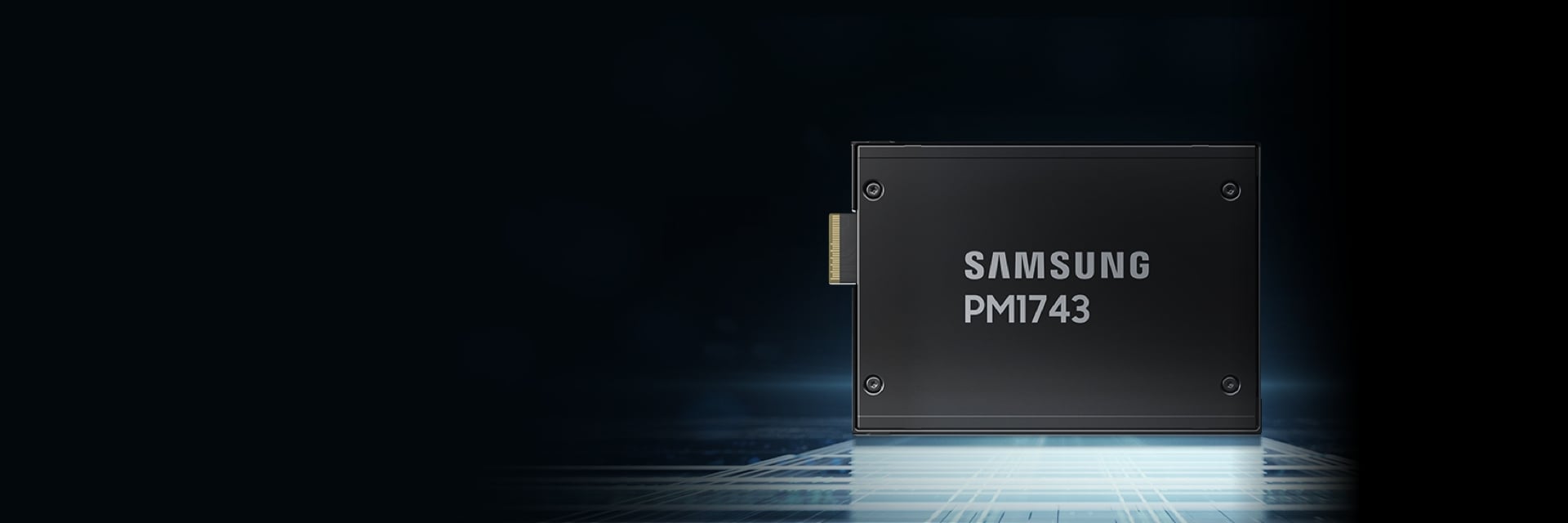
Samsung PM1743 enterprise SSD
Samsung PM1743 enterprise SSD · Image courtesy of Samsung. Manufacturer source

Enterprise SSD families to understand

PM1743

Samsung’s PM1743 is an enterprise PCIe 5.0 SSD family. Use the exact capacity and form-factor specification when checking throughput, endurance and server compatibility.

Evaluate: the host interface, cooling, firmware support and the server’s qualified drive list.

Samsung PM1743 product page

9550 NVMe SSD

Micron lists sequential performance up to 14 GB/s read and 10 GB/s write for the 9550 family. Those headline figures are not a promise of application performance across every capacity or workload.

Evaluate: sustained mixed I/O, write endurance and latency under load.

Micron 9550 specifications

CM7 series

KIOXIA’s CM7 family includes read-intensive and mixed-use enterprise options. Match the endurance class to the write workload rather than selecting capacity alone.

Evaluate: the exact model, form factor and required host connectivity.

KIOXIA CM7 family brief

Three storage roles in an AI deployment

01 / LOCAL

Node storage

NVMe inside a server can hold a local dataset cache, temporary files or checkpoints. Plan how important data survives a node failure.

02 / SHARED

Cluster storage

A shared file or parallel storage system gives multiple workers access to data. Measure aggregate throughput and metadata operations under concurrent load.

03 / DURABLE

Object & backup

Use durable storage for source datasets, model artifacts and recovery copies. Include retention, restore time and transfer costs in the design.

Interface, protocol and form factor are different

TermWhat it describesCheck before buying
PCIeThe electrical link and generationAvailable lanes and host generation
NVMeThe storage command protocolOS, controller and firmware support
U.2 / U.3, E1.S, E3.S, M.2Physical and connector familiesExact backplane, carrier, slot and thermal compatibility
DWPD / TBWWrite-endurance ratingsExpected writes over the rated warranty period

Two drives with the same capacity may have different endurance, power-loss protection and sustained performance. A matching connector alone does not establish compatibility.

What to test before acceptance

  • Dataset loading: measure throughput with the real file sizes and number of readers.
  • Checkpoint writes: test the pause imposed on a running workload.
  • Steady-state latency: include a representative read/write mix, not only a fresh-drive benchmark.
  • Recovery: verify restore procedures and behavior when a node, drive or network path fails.

Planning a hardware change?

Send us your workload, platform and site requirements.

Discuss your project

Manufacturer references reviewed 13 September 2026. Examples are informational, not a statement of stock, resale authorization or guaranteed compatibility. Confirm the exact SKU and platform documentation with your supplier.